
Federal Court Vacates HRSA’s 2013 340B Guidance Prohibiting DSH GPO Use and Replenishment Models
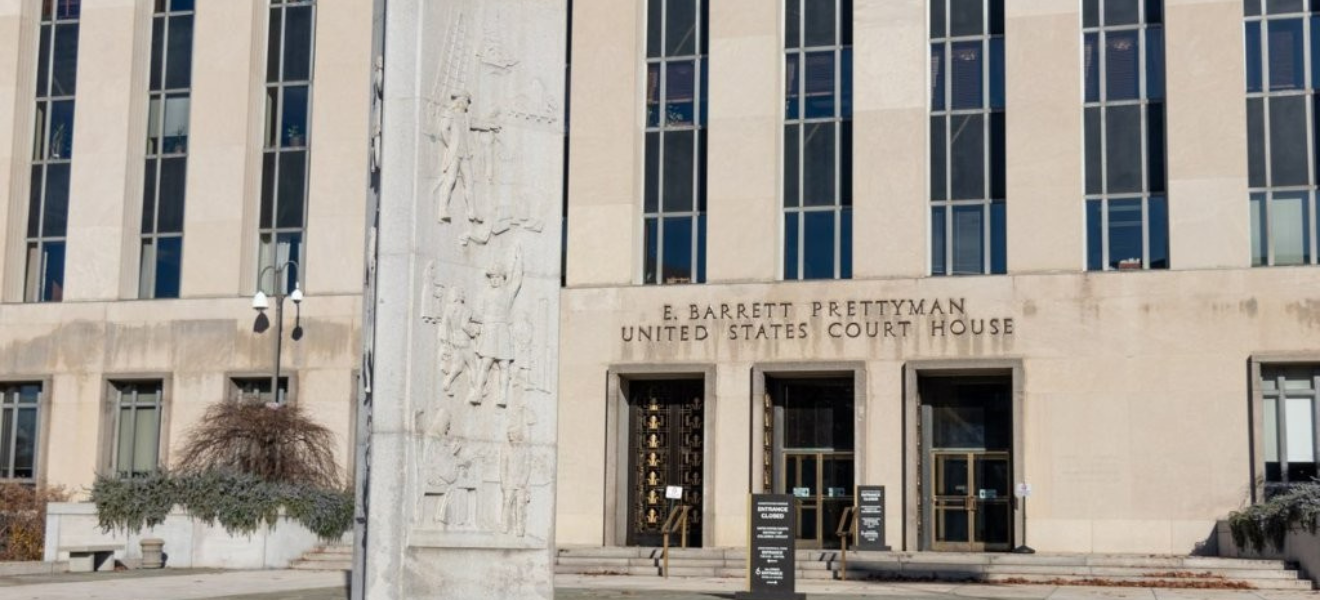
On March 31, 2026, the U.S. District Court for the District of Columbia vacated the Health Resources and Services Administration’s (“HRSA”) 2013 guidance that limited when certain 340B covered hospitals, namely disproportionate share hospitals (DSHs), could use group purchasing organizations (“GPOs”) to acquire outpatient drugs under virtual or replenishment inventory models (“2013 GPO Policy”). Premier, Inc. v. HHS, No. 1:24-cv-03116 (D.D.C. Mar. 31, 2026). The court set aside HRSA’s 2013 GPO Policy as arbitrary and capricious.
Although the court did not endorse the GPO replenishment model as lawful, it cast doubt on HRSA authority to restrict such purchasing arrangements until there is at least further explanation and/or rulemaking.
This decision also follows a series of recent court rulings that have scrutinized and, in some instances, limited HRSA’s ability to impose binding requirements on 340B covered entities, particularly where agency positions are articulated through sub‑regulatory guidance rather than notice‑and‑comment rulemaking or are not supported by a reasoned explanation grounded in statutory text.
Background on the 340B GPO Prohibition
Under the 340B statute, DSHs may participate in the 340B Drug Pricing Program only if they “do[] not obtain covered outpatient drugs through a group purchasing organization or other group purchasing arrangement.” 42 U.S.C. § 256b(a)(4)(L)(iii). For decades, hospitals subject to this “GPO prohibition” relied on a variety of inventory management approaches—including a “virtual inventory model” or “replenishment model”—to manage mixed inpatient, outpatient, and 340B drug use without maintaining strictly separate inventories in order to comply with the statute.
In February 2013, HRSA first directed, via sub regulatory guidance, that hospitals subject to the GPO prohibition violate the statute if they acquire covered outpatient drugs through a GPO, even if the drugs are later reclassified or “replenished” with 340B-priced product through accounting mechanisms. HRSA asserted that such violations could not be cured and could result in termination from the 340B Program and repayment obligations.
In July 2023, Premier, Inc., a health care improvement company that operates a GPO providing services to 340B hospitals, asked HRSA for an exemption from the 2013 guidance, which HRSA rejected. Premier then sued alleging that the HRSA’s policy was contrary to the text and purpose of the 340B statute, arbitrary and capricious under the Administrative Procedure Act (“APA”), and issued in excess of HRSA’s limited statutory authority. Premier argued that, under a replenishment model, drugs purchased for initial neutral inventory are not “covered outpatient drugs” at the time of purchase and therefore fall outside the scope of the GPO prohibition, and that HRSA failed to provide a reasoned explanation for adopting a contrary position.
The Court’s Decision
The court concluded that the 2013 GPO Policy is arbitrary and capricious under the APA and therefore must be vacated.
The court emphasized that HRSA failed to explain its position that use of a GPO‑based replenishment model violated the statute, in view of the statutory text, prior agency guidance, or the overall structure of the 340B Program.
The court also highlighted HRSA’s failure to grapple with its own prior practice. Before 2013, HRSA and its contractors had tolerated or implicitly permitted replenishment models that relied on GPO‑purchased initial neutral inventory. Yet the 2013 guidance neither acknowledged nor explained this apparent shift in position, a deficiency the court found incompatible with reasoned agency decision‑making.
Importantly, the court did not decide whether the 340B statute affirmatively permits hospitals subject to the GPO prohibition to use GPOs for initial neutral inventory purchases. Instead, the court held only that HRSA’s contrary interpretation lacked an adequate explanation.
Because the court invalidated the guidance as arbitrary and capricious, the court did not reach Premier’s additional arguments that HRSA’s guidance lacked statutory authority and constituted an unlawful legislative rule.
Practical Implications for Covered Entities
The immediate effect of the court’s decision is to remove the 2013 HRSA guidance as a valid enforcement predicate. However, the ruling does not greenlight GPO funded initial inventory purchases and providers should not assume that pre‑2013 purchasing practices are now automatically permissible.
Further, HRSA still has the option to appeal or, if not, may seek to adopt new guidance or take other action to articulate a revised interpretation of the GPO prohibition that addresses the deficiencies identified by the court.
Audit and compliance exposure therefore is uncertain. DSHs remain subject to the statutory GPO prohibition, annual 340B certifications, and HRSA audit authority. And HRSA may be able to articulate an APA-sustainable interpretation of the statute or seek to rely on existing statutory standards in audits or corrective action plans.
Finally, the court’s decision, if not altered in any appeal, may be relevant for DSHs addressing repayment demands, adverse audit findings, or eligibility determinations that were premised on the 2013 guidance’s interpretation of initial inventory purchases.
Issues to Consider Following the Decision
In light of the decision, DSHs should consider:
- Reviewing any pending or recently completed HRSA audits, audit findings, or corrective action plans that relied on the now‑vacated 2013 guidance, in order to assess potential exposure or next steps. This includes HRSA audits that have been initiated but not formally closed, whether at the document request, draft finding, corrective action, or reconsideration stage.
- Monitoring HRSA communications and any subsequent agency action, including indications regarding audit posture, enforcement priorities, or efforts to articulate a revised interpretation of the GPO prohibition.
- Consulting counsel before making any material changes to GPO or 340B purchasing structures, particularly where such changes could affect audit exposure, repayment demands, eligibility certifications, or prior representations made to HRSA.
We will continue to monitor developments related to this decision and provide updates as additional guidance becomes available. If you have questions regarding the implications of this decision for your organization or would like assistance evaluating compliance considerations, please contact Sven Collins, Nina Marsden, Martha Cramer, or your regular Hooper, Lundy & Bookman, P.C. contact.
Professionals